How Juice WRLD Got That Real Respect from Eminem
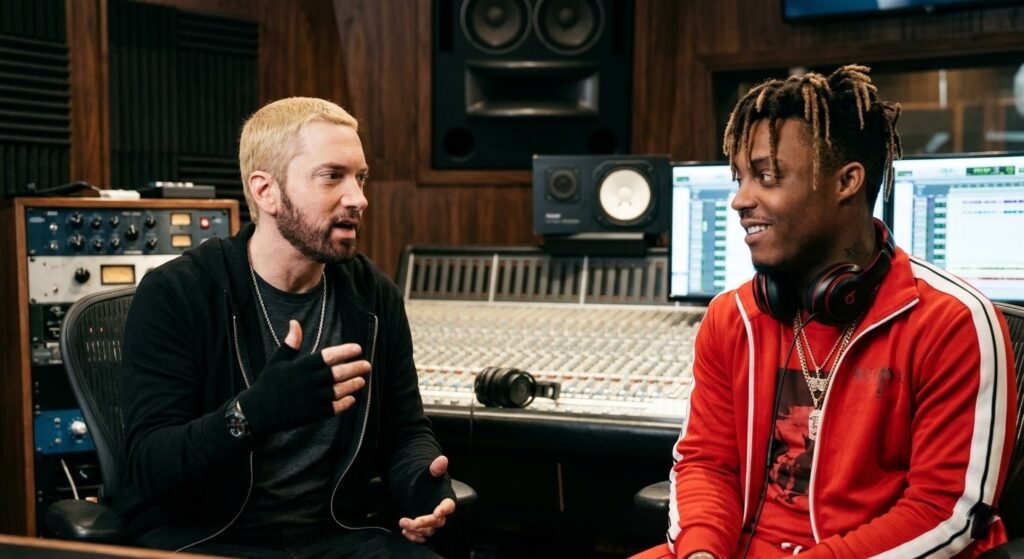
Getting respect from Eminem is like trying to get past the toughest security guard in hip hop history. The man has spent decades judging rappers based on bars, skill, hunger, and pure pen game. You can have all the streams in the world, all the viral dances, all the designer clothes, but if your lyrics don’t hit? Marshall Mathers usually ain’t impressed.
That’s why the story between him and Juice WRLD still hits people so hard.
Because Juice wasn’t supposed to be the guy Eminem connected with like that. At least not according to the internet back then.
Around the late 2010s, there was this giant split happening in rap. Older hip hop heads kept complaining about “mumble rap” while younger fans were embracing melodic artists who mixed singing with freestyling and emotional lyrics. Eminem was pretty vocal during that era too. He clearly wasn’t feeling a lotta the lazy writing and repetitive music flooding playlists at the time.
Then Juice WRLD showed up and changed the whole conversation.
At first glance, people tried to throw him into the same category as every other young rapper blowing up online. Face tattoos, melodic hooks, emotional songs about heartbreak and pain. The industry thought they had him figured out already.
But then he touched a microphone and everybody realized this kid was different.
The moment that really shifted everything happened in October 2018 during Juice WRLD’s now legendary freestyle session on Tim Westwood TV. If you were outside during that era, you remember how fast clips from that freestyle started spreading online.
People couldn’t believe what they were hearing.
Juice walked in there with almost no pressure on him. No giant speech. No dramatic setup. He just asked for classic Eminem beats and started rapping straight off the top of his head for nearly an hour.
Not five minutes.
Not ten.
Almost fifty whole minutes.
That still sounds insane when you say it out loud.
Most rappers can barely freestyle for sixty seconds before repeating bars or losing momentum. Juice WRLD kept going like somebody plugged his brain directly into the speakers. Beat after beat, rhyme after rhyme, punchline after punchline. No notebook. No phone. No long pauses trying to think.
Just pure instinct.
Watching that freestyle felt like watching somebody sprint for miles without getting tired. He floated over beats like “The Real Slim Shady” and “My Name Is” so naturally it almost looked easy. But any rapper will tell you that what he did was incredibly hard.
Especially over Eminem instrumentals.
Those beats leave no room for weakness. You gotta really rap on those.
And Juice did more than survive them. He owned them.
That’s the part people forget sometimes about Juice WRLD. Underneath the melodies and emotional records was a real student of hip hop. The kid loved rap deeply. He studied flows, cadences, punchlines, rhythm. You could hear influences from older legends all over his style without him sounding like a copy of anybody.
He understood how to make technical rap still feel emotional.
That’s rare.
A lotta lyrical rappers can rhyme well but sound cold. A lotta melodic rappers can make catchy songs but struggle with bars. Juice somehow balanced both worlds naturally. He could make a heartbreak anthem one minute and freestyle like a battle rapper the next.
That combination caught Eminem’s attention immediately.
And when Em respects you, people notice.
After Juice WRLD passed away in 2019, Eminem spoke about him with real admiration. Not fake industry praise either. You could tell Marshall genuinely felt shocked by how talented Juice was. In interviews, he talked about seeing that Westwood freestyle and basically wondering how somebody so young could already be that sharp.
You could hear the sadness in his voice too.
Because I think Eminem understood something a lotta people realized after Juice died: the kid was only getting started.
That’s what makes the whole story feel heavy now.
Juice WRLD was only really in the mainstream spotlight for a couple years, but the impact felt way bigger than the time he had. He moved fast. Too fast almost. One minute “Lucid Dreams” was everywhere, next minute he was becoming one of the faces of a whole generation of rap.
And unlike artists who rely heavily on writers and studio tricks, Juice could create on command.
Producer after producer told stories about him walking into the booth, hearing a beat once, and building entire songs off pure freestyle energy. Not rough drafts either. Actual finished records. Hooks, verses, melodies, all flowing out naturally like conversation.
That kind of gift doesn’t happen often.
Honestly, it reminded older rap fans of the freestyle era when being nice on the mic actually mattered heavy. That’s probably another reason Eminem respected him so much. Juice wasn’t just making catchy songs. He understood the roots of the craft too.
Then came “Godzilla.”
That record feels different now because of everything surrounding it. Released on Eminem’s Music to Be Murdered By album after Juice WRLD’s death, the song ended up becoming way more emotional than anybody expected.
You got Eminem attacking the beat with one of the fastest verses of his career while Juice floats through the hook with that haunting melody only he could make. The contrast worked perfectly.
Chaos and emotion.
Technical skill and vulnerability.
Old school and new school meeting in the middle.
And the crazy part? Juice had always looked up to Eminem. He openly talked about Marshall being one of his favorite rappers growing up. You could hear the influence in his music sometimes too, especially in the way he bent words and stretched flows across beats.
So getting the chance to work with his idol probably meant everything to him.
That’s why “Godzilla” feels almost bittersweet now. Like a passing of the torch that never fully got the chance to happen.
The music video hits even harder because it closes with Juice talking about wanting to use his fame to help people and make a positive impact. Hearing those words after his death made fans look at him differently. Not just as another rapper, but as a young artist trying to figure life out in public while carrying enormous pressure.
And real talk, Juice WRLD connected with people because he sounded human.
He didn’t rap like somebody pretending to be invincible all the time. He talked about heartbreak, addiction, anxiety, loneliness, love, confusion. Stuff kids his age actually felt. That honesty made fans ride for him in a deep way.
But underneath all the emotion was serious talent.
That’s what Eminem recognized.
Not hype. Not trends. Not streaming numbers.
Skill.
Pure raw ability.
That’s why Juice WRLD’s legacy still matters so much in hip hop conversations today. He proved you could be melodic and still lyrical. Emotional and still technically sharp. Modern without disrespecting the roots of rap.
And for somebody like Eminem to publicly salute him the way he did?
That’s basically hip hop royalty stamping your name into history forever.
Juice earned that respect the hard way too. No shortcuts. No gimmicks.
Just bars, passion, and a microphone.