The Day the Rap Bible Got Burned: How Eminem Smashed Benzino and The Source Magazine
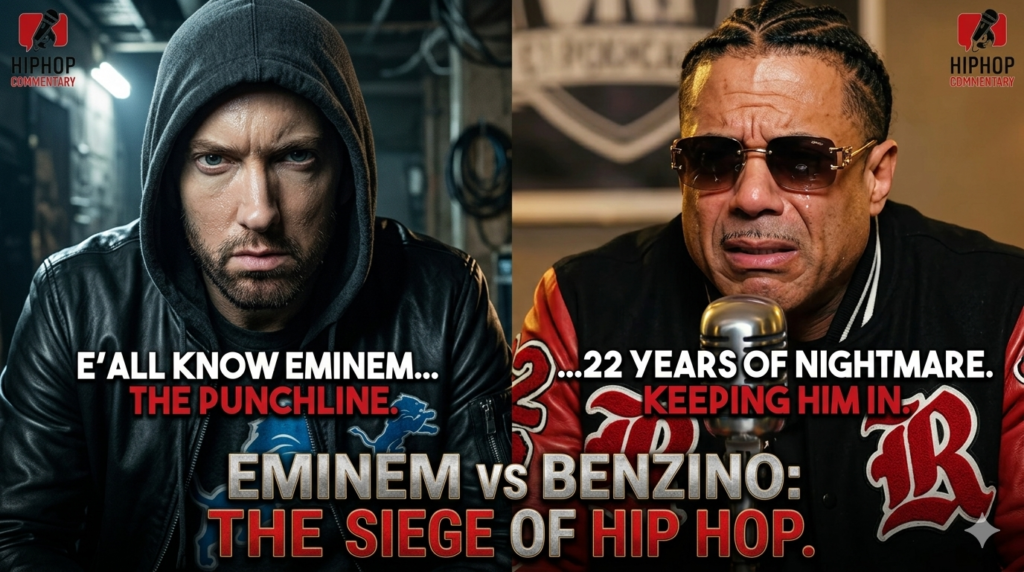
Back in the early 2000s, hip-hop had one magazine that everybody respected. One magazine artists dreamed about being featured in. That was The Source. People really called it the “Bible of Hip-Hop,” and honestly, it wasn’t even an exaggeration. If they gave your album five mics, your stock went through the roof overnight. Labels celebrated. Fans listened different. Other rappers got jealous. That little rating system had crazy power back then.
And sitting near the top of that empire was Raymond “Benzino” Scott.
Now here’s where the story gets messy.
Benzino wasn’t just helping run the magazine. He also wanted to be a rapper himself. Badly. The problem was, hip-hop fans are smart. They can smell fake hype from a mile away. And a lot of people felt like Benzino was using The Source to push his own music and force himself into conversations he didn’t really belong in.
Then along came Eminem.
At that point, Eminem wasn’t just hot. He was untouchable. Every song blew up. Every verse had people rewinding bars. He had suburban kids, battle rap heads, street dudes, rock fans, everybody listening at the same time. That kind of crossover power was rare back then.
And Benzino hated it.
The whole thing started over album ratings, but that was really just the spark. The deeper issue was pride. Ego. Control. Benzino didn’t like the way Eminem was dominating the culture, especially as a white rapper getting so much love in a Black art form. He started throwing shots in interviews, calling Eminem a “culture vulture” and trying to paint him as another Vanilla Ice situation.
But here’s what Benzino didn’t understand. Eminem wasn’t built like those industry plants or gimmick rappers. Dude came from battle rap. From Detroit. From getting booed in rooms full of people who already doubted him before he even touched the mic.
That pressure made him dangerous.
So when The Source gave The Eminem Show only four mics in 2002, fans noticed immediately. Four mics ain’t terrible, but come on. That album was everywhere. People already knew it was a classic while it was still fresh on shelves. So the rating felt personal. Like somebody was trying hard not to give him his flowers.
Eminem definitely took it that way.
Instead of sitting quietly, he started firing back through music. And once he dropped diss tracks like “The Sauce” and “Nail in the Coffin,” the whole game changed. Those records weren’t normal rap beef songs. They felt surgical. Mean. Personal. Eminem wasn’t just clowning Benzino’s bars. He was exposing him.
He mocked his age, questioned his credibility, and basically told the world Benzino only had power because he owned a magazine. One of the coldest parts was when Eminem accused him of trying to live through his own son because his rap career never took off the way he wanted.
That line hit different.
Because under all the jokes and insults, there was something sad sitting underneath the beef. Benzino looked like a guy chasing validation nonstop. Like no amount of influence was enough unless people also respected him as an artist.
The crazy part is, Benzino still thought he could win.
So in 2003, he tried to pull out the nuclear option. He released old recordings from Eminem’s teenage years where Marshall used racist language after a bad breakup. Benzino thought this would finally end Eminem’s career once and for all.
For a second, the culture paused.
People were shocked. Angry too. It was serious. But then something unexpected happened. Eminem didn’t run from it. He addressed it publicly and later talked about it in music, especially on “Yellow Brick Road.” He admitted he was young, angry, and stupid at the time.
That honesty changed everything.
Instead of destroying Eminem, the move backfired on Benzino. Fans and industry people started feeling like Benzino wasn’t exposing something for the culture. They felt like he was weaponizing old pain because he was losing a rap battle.
That difference mattered.
Soon, The Source started taking damage. Big advertisers pulled away from the magazine. Artists stopped trusting it. Readers questioned every review and every cover. The “Bible of Hip-Hop” suddenly looked biased, emotional, and messy.
And once trust disappears in media, things fall apart fast.
By 2006, Benzino and co-founder Dave Mays were pushed out of the company. Just like that, one of the most powerful hip-hop magazines ever lost its grip on the culture. The Source survived, technically, but it never felt the same again.
Meanwhile, Eminem kept moving like nothing happened.
That’s what made the whole thing even crazier. Benzino spent years trying to slow Eminem down, but all it really did was speed up his legend. People saw him as unbeatable after that. Like no matter what angle you attacked from, he’d find a way to turn the room back in his favor.
Even now, decades later, people still talk about that beef like it happened yesterday.
And honestly, the story gets even more complicated when you look at Benzino’s family life. His daughter Coi Leray eventually became a star herself, building her own fanbase and career. But the relationship between them has had public tension over the years. Fans always end up connecting those moments back to Eminem’s old disses about Benzino chasing fame too hard.
That’s what makes this whole saga feel bigger than rap.
It’s about ego. Pride. Power. Fathers and children. Media manipulation. Respect. All of it wrapped into one long ugly fight.
What’s wild is how different the two men handled attention. Eminem mostly disappeared into the music. Benzino kept trying to fight for the spotlight. One let the art speak. The other kept explaining himself every few years on podcasts and interviews.
And the internet never forgets.
That’s why this story still sticks around today. It wasn’t just two rappers trading insults. It was a real moment where hip-hop watched a giant media company collapse because personal feelings got mixed with business.
At the end of the day, The Source had the magazine covers, the ratings, and the platform. But Eminem had the one thing you can’t fake in this culture.
The bars.
And once the microphone got involved, everything else started falling apart.