Busta Rhymes vs DMX: The Debate That Still Splits Hip-Hop Fans Years Later
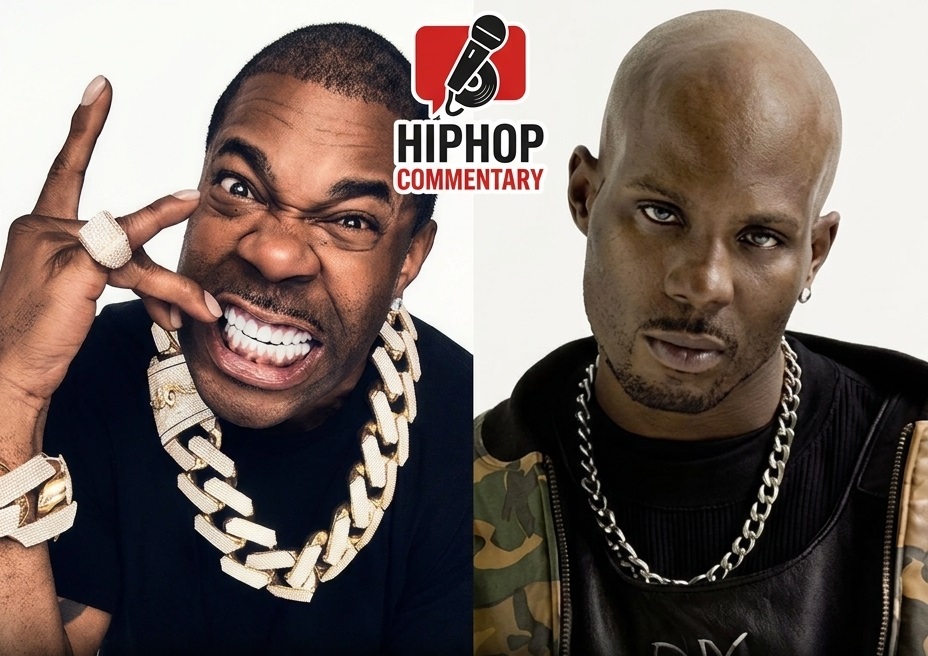
Hip-hop fans been arguing about this for years, and honestly, nobody ever fully wins the debate.
Who was better: Busta Rhymes or DMX?
The second that question comes up, the room usually splits in half.
Some people start talking about flow, breath control, and pure rap skill. Others stop all that technical talk immediately and say, “Yeah, but DMX made you feel something.”
That’s why this debate never dies.
Because these two legends represented completely different sides of hip-hop at the exact same time. And somehow, both changed the culture forever without sounding anything alike.
Back in the late ‘90s, rap was in a strange place emotionally. The deaths of 2Pac and The Notorious B.I.G. left a giant hole in hip-hop. The energy shifted after that. Labels started chasing shinier records, flashy videos, radio hooks, and commercial sounds.
Everything looked expensive.
But a lotta fans felt like something real was missing underneath all that.
Then Busta and DMX stepped in with two completely different answers to the same problem.
Busta Rhymes came through like pure chaos in human form.
From the second he dropped The Coming in 1996, people realized this dude wasn’t normal. His voice alone sounded larger than life. Loud. Explosive. Animated. Then you added the flows on top of that? Forget it.
Busta didn’t just rap on beats. He attacked them.
His Jamaican roots played a huge role in his style too. You could hear the dancehall influence in his rhythm and delivery. He stretched words, bent syllables, sped up, slowed down, then snapped everything back into place perfectly.
Tracks like Gimme Some More felt like roller coasters. One minute he sounding controlled, next minute he flying across the beat like he trying to outrun the drums themselves.
Then there’s Break Ya Neck.
Man, when that record dropped, everybody tried rapping along and failed halfway through.
That’s what made Busta special. He turned technical rap skill into entertainment. Even people who didn’t fully catch every lyric could still feel the energy exploding out the speakers.
And visually? Nobody looked like him either.
His videos were basically controlled madness. Big colors. Weird camera angles. Wild outfits. Giant energy everywhere. Working with Hype Williams helped turn Busta into one of the most unforgettable visual artists hip-hop ever had.
You watched a Busta Rhymes video once and remembered it forever.
Plus the longevity matters too.
Busta stayed relevant across multiple eras of rap. Late ‘90s, early 2000s, club era, mixtape era, all that. Songs like Pass the Courvoisier, Part II and Touch It kept him active while other rappers faded away.
Twelve Grammy nominations without a win still sounds crazy, by the way.
But then came DMX.
And the entire mood of hip-hop changed overnight.
When It’s Dark and Hell Is Hot dropped in 1998, it didn’t sound polished or glamorous. It sounded hurt. Angry. Exhausted. Honest.
That album felt like somebody fighting demons directly into a microphone.
DMX wasn’t trying to impress people with complicated wordplay or super-technical rhyme patterns. That wasn’t his goal. He wanted you to feel his pain, his struggle, his rage, his faith, all of it at once.
And somehow millions of people connected with that immediately.
One second DMX barking through Ruff Ryders’ Anthem sounding like the toughest man alive. The next second he praying on records, questioning himself, crying out to God, talking about betrayal and loneliness.
That vulnerability hit different.
Especially during a time when a lotta rappers were focused mainly on looking untouchable.
DMX made being broken sound human.
That’s why fans loved him so deeply. He wasn’t perfect, and he never pretended to be. His music felt raw in a way hip-hop rarely allows.
And his run was insane.
People forget how dominant DMX really was for a stretch there. His first five albums all debuted at number one on Billboard. Nobody had done that before. In 1998 alone, he dropped two multi-platinum albums that both went straight to the top.
That’s superstar-level pressure.
Then you saw him perform live and finally understood why audiences went crazy for him.
DMX didn’t need dancers or huge stage tricks. Sometimes it was just him, a microphone, and pure energy pouring out his body. Dude performed like every show might be his last one on Earth.
You believed every word he said too.
That’s rare.
What makes this whole debate even crazier is that Busta and DMX actually came from similar roots. Both attended George Westinghouse Career and Technical Education High School in Brooklyn. That school was packed with future legends too, including Jay-Z and Biggie.
Imagine those hallways for a second.
Future rap icons battling each other before the world even knew their names.
That environment sharpened everybody. It created competition naturally. But it also created respect. Busta and DMX weren’t enemies. They represented different styles pushing each other forward.
And honestly, hip-hop needed both of them.
Busta gave rap innovation. Energy. Technical brilliance. Fearless creativity.
DMX gave rap emotion. Pain. Honesty. Spiritual conflict.
One sounded like the future crashing through your speakers.
The other sounded like real life fighting to survive.
So when people ask who was better, the answer usually depends on what you value most in hip-hop.
If you love elite flows, breath control, wild creativity, and technical skill, Busta Rhymes probably wins your vote.
If you care more about emotional connection, raw storytelling, and feeling understood through music, DMX probably takes it.
That’s why the debate never ends.
Because deep down, fans ain’t really choosing between two rappers.
They’re choosing between two different feelings.