Fat Joe Joins Hip-Hop Icons in Urging Supreme Court to Halt Texas Execution
"The Stuff That We Write Isn't Actually Real"
A coalition of music superstars, including Fat Joe, Killer Mike, T.I., and Young Thug, has filed an urgent appeal with the U.S. Supreme Court, arguing that Texas prosecutors unconstitutionally used an inmate's rap lyrics to secure a death sentence. They are fighting to stop the April 30 execution of James Garfield Broadnax.
In a powerful show of unity, some of hip-hop’s biggest
names are taking a major legal battle to the highest court in the land, arguing
that the state of Texas turned creative expression into a death warrant. The
artists have filed amicus curiae briefs with the U.S. Supreme Court in support
of James Garfield Broadnax, a Texas man on death row whose handwritten rap
lyrics were used against him during the sentencing phase of his 2009
trial .
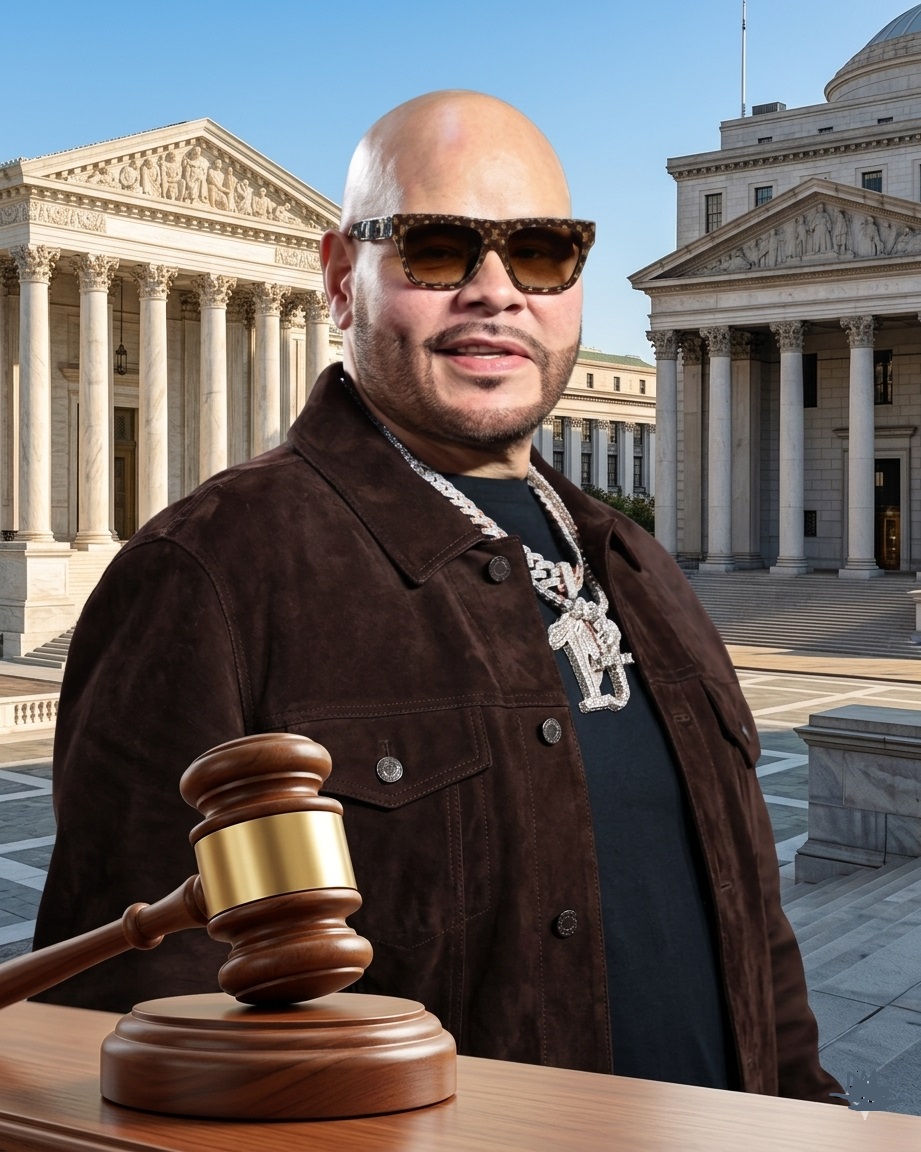
Among the most vocal advocates is veteran rapper Fat Joe, who, along with icons like Killer Mike, T.I., and Young Thug, is pleading with the justices to halt Broadnax‘s execution, scheduled for April 30, 2026 . At the heart of their argument is a fundamental principle of artistic expression: rap music is often fiction, not fact.
“There’s no way on earth that the stuff that we write
is actually real,” Fat Joe has said in support of the cause, echoing a
sentiment that forms the backbone of the legal filing . The artists argue
that prosecutors deliberately misinterpreted Broadnax‘s lyrics treating
violent, exaggerated imagery as a literal confession and a predictor of future dangerousness
rather than recognizing it as a creative work shaped by the conventions of the
gangster rap genre .
The Case: Lyrics as Evidence of Future
Danger
The case against James Broadnax dates back to 2008, when he was 19 years old and accused of killing two men during a robbery outside a Garland, Texas music studio .
He was convicted in 2009 by a jury that was nearly all-white after prosecutors eliminated all prospective Black jurors . The rap lyrics were not used to prove his guilt, but were held back specifically for the punishment phase, where Texas law requires jurors to determine if a defendant poses a "continuing threat to society" .
During deliberations on whether to sentence Broadnax
to life or death, the jury twice requested to review more than 40 pages of his
handwritten lyrics. Hours before sentencing him to die, they looked at them
again .
Prosecutors read lines aloud to the jury, including verses written while Broadnax was in jail awaiting trial:
"Hold up. Stop and rewind. A little story while I’m in this bitch. Yeah, I hit the lick. I got two murder charges on me. I might just go to the Judge and tell him I’m going to merk him, because I’m J.B." .
Referring to this, a prosecutor told the jury, "If that’s not the sign of a psychopathic killer, I don’t know what is, folks" .
The Artists' Argument: Fiction vs. Reality
The amicus briefs, filed separately by Travis Scott and a larger coalition including Fat Joe and Killer Mike, argue that this line of thinking is a dangerous and unconstitutional violation of the First Amendment .
The brief filed by the coalition, led by Dallas appellate attorney Chad Baruch, argues that prosecutors used the lyrics to "stoke racial and anti-rap bias" and to capitalize on stereotypes of the young Black "super predator" .
They contend that the lyrics
were "irrelevant" to the legal question of future dangerousness and
served only to prejudice the jury.
"Exaggerated tales of violence, sex, and criminal behavior sell to a broad swath of Americans and any would-be gangsta rapper must learn and practice these conventions of the form," the brief states, arguing that the genre should be afforded the same protection as a Stephen King horror novel or a Quentin Tarantino film .
In a statement, Baruch emphasized the stakes: "Rap lyrics are creative expression. When prosecutors treat them as literal evidence of future violence, they invite jurors to decide a death-penalty case based on fear and stereotypes instead of the law" .
Travis Scott‘s legal brief echoed this, arguing that using rap lyrics in this way "functionally operates as a categorical and straightforwardly unconstitutional content-based penalty on rap music as a form of expression" . His attorney, Ellyde R. Thompson, added, "A death sentence should never be based in any part on constitutionally protected artistic expression" .
Killer Mike summed up the artists‘ position succinctly in an interview with The New York Times: "No matter how beautiful it sounds, or how horrific it may sound, it’s still just art. It’s an interpretation of the human spirit. It is not an admission of guilt" .
A Broader Movement
This case is part of a growing national debate over the criminalization of rap music. Researchers at the University of Richmond have documented nearly 700 cases where rap lyrics were introduced as evidence in criminal proceedings, with the vast majority involving Black and Latino defendants .
The Supreme Court has not yet decided whether it will
hear Broadnax’s case or grant a stay of execution. However, the intervention of
so many high-profile artists has brought renewed attention to the issue. As
Chad Baruch put it, the case presents "an ideal opportunity for the
Supreme Court once and for all to plunge
a much-needed dagger through the heart of the criminalization of rap as an art
form" .
For Fat Joe and his peers, the message is clear: art
is not a crime, and fantasy should not be a death sentence.