Joe Budden Podcast Says “It’s Over” for Gucci Mane After Pooh Shiesty Diss Sparks Backlash
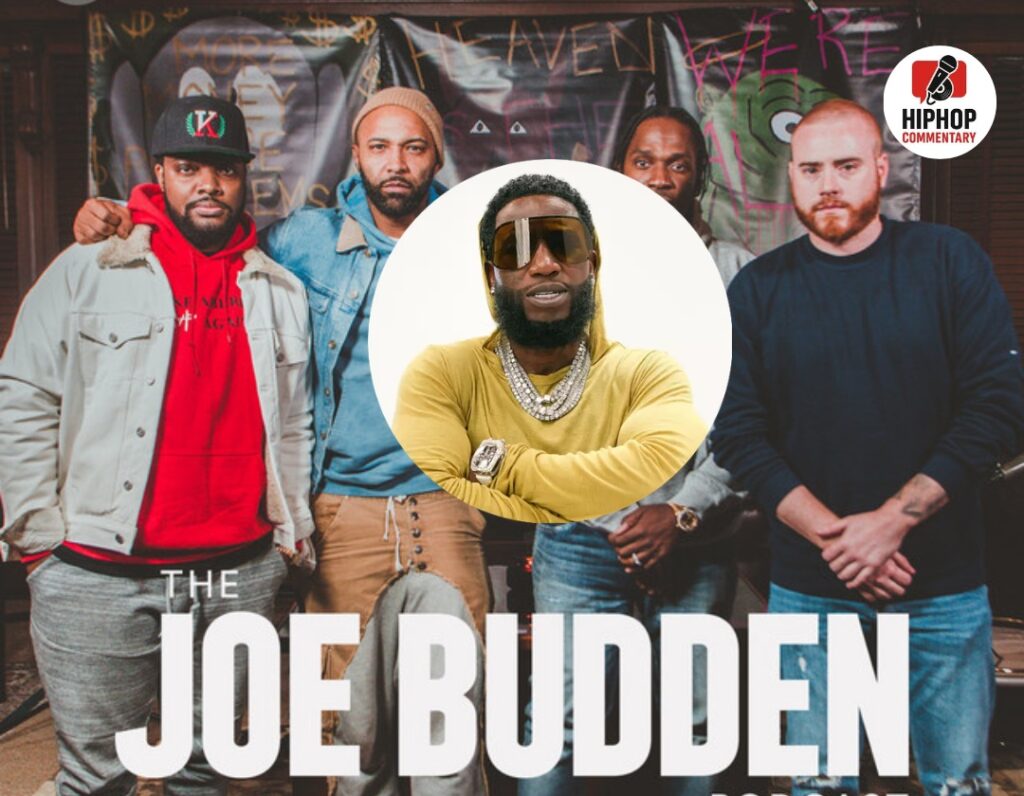
What started as a diss track quickly turned into something much heavier than anyone expected. Not just another rap moment, not just another headline. This one hit a different nerve. And now, according to discussions on The Joe Budden Podcast, people are openly questioning what this could mean for Gucci Mane’s reputation moving forward.
And yeah, the conversation got real fast.
This isn’t just about music anymore. It’s about image, timing, loyalty, and that tricky line in hip-hop where storytelling ends and real-life consequences begin.
It all kicked off after Gucci Mane dropped “Crash Dummy,” a diss track aimed at Pooh Shiesty. On the surface, diss tracks are nothing new in rap. That’s part of the culture. Artists talk, respond, and sometimes clash through music. But this time, the timing changed everything.
The track landed right after serious legal allegations connected to Pooh Shiesty resurfaced in the public eye. And once that happened, people stopped hearing it like a regular diss record. Instead, they started connecting dots, whether those dots were meant to be connected or not.
In the song, Gucci references betrayal and what sounds like a setup during a business-style meeting. Listeners immediately started speculating that he was pointing directly at the alleged kidnapping and robbery case tied to Pooh Shiesty’s legal situation.
That’s where the temperature shot up.
Because now it wasn’t just rap talk anymore. It was tied to something real, something already sitting inside the legal system.
When The Joe Budden Podcast broke it down, they didn’t hold back. Joe Budden himself reportedly called the track “horrible,” but the criticism went beyond just the music. He questioned Gucci Mane’s positioning in the culture, pointing out how he’s been moving more like a businessman in recent years while still stepping into street-coded conflict through music.
And that contradiction became the main focus.
The podcast started digging into something deeper than whether the song sounded good or not. They were looking at consistency. Identity. The image Gucci has built over time versus the energy coming through in this new record.
Some on the panel felt like there was a disconnect. Like you can’t fully step into a corporate lane while still engaging in street narratives without it clashing at some point. Others on the show pushed back, saying that hip-hop has always carried real-life tension into music, and artists shouldn’t be boxed in.
That’s where the debate split wide open.
Because there’s another layer to this whole thing that can’t be ignored. Pooh Shiesty’s situation isn’t just rap controversy. It’s tied to an active federal case.
Authorities have alleged that a January meeting in Dallas turned into a violent armed incident involving multiple people. Reports describe a situation where victims were allegedly held at gunpoint and forced into signing documents, along with being robbed of valuables. Pooh Shiesty is currently in custody as the case continues to move through the system.
So when music starts referencing events that resemble real legal allegations, people naturally get uneasy. Not everyone is comfortable with that overlap between court-level seriousness and entertainment.
That’s exactly what the podcast wrestled with. One of the biggest concerns raised was whether dropping a diss track in the middle of an ongoing case crosses a line, even within hip-hop’s long history of conflict-driven music.
Another voice on the show pointed out something simple but important. The situation is just too serious to be turned into content so quickly. And that comment stuck with a lot of listeners.
From there, the conversation started shifting again, this time toward perception.
Because even if nothing illegal or wrong is proven in relation to the song itself, perception in hip-hop can move faster than facts. And right now, perception is split right down the middle.
Some fans are standing behind Gucci Mane completely. They see it as him responding in the only way he knows how, through music. In their eyes, if he felt targeted or involved in any way, he has the right to speak on it creatively.
Others feel like the timing makes everything look worse than it needs to be. To them, it feels like turning a serious situation into entertainment before all the facts are even settled.
And inside the podcast itself, there wasn’t one unified take either. One host simply didn’t like the track musically. Another raised the question of whether people would be reacting this strongly if the song was actually better executed. That opened another angle nobody expected.
Was the backlash about ethics? Or was it also about quality?
That question lingered.
Because sometimes in hip-hop, the message and the execution get tangled together. If a record lands perfectly, people might interpret it differently. If it doesn’t, criticism grows faster.
At the same time, defenders of Gucci Mane brought up a valid point. Hip-hop has always reflected real life. Artists talk about what they see, what they’ve lived, and what’s happening around them. That’s part of the genre’s foundation.
But even that argument has limits for some people, especially when legal consequences are still unfolding in real time. When cases are active, the stakes feel higher. The words don’t just sit in songs anymore, they sit next to real-world outcomes.
And that’s what makes this moment different from a typical rap beef.
For Gucci Mane, this is happening at a time when his public image has shifted a lot. Over the years, he’s moved from heavy controversy into a more polished business and mentorship role in the industry. He’s been seen as someone who grew out of chaos and built something stable.
Now, some observers feel this record risks pulling him back into a space he spent years stepping away from. Others argue it’s exactly him staying true to who he is, no matter how his career evolved.
Either way, the attention isn’t fading.
The Joe Budden Podcast didn’t hand down a final judgment, but their discussion made one thing very clear. This isn’t just about a diss track anymore. It’s about reputation, timing, and how closely music is being tied to real-life situations that still haven’t fully played out.
And as long as the legal case continues and reactions keep spreading, this story isn’t going anywhere.
Because in moments like this, hip-hop isn’t just reacting to culture. It’s shaping how the culture sees everything connected to it.