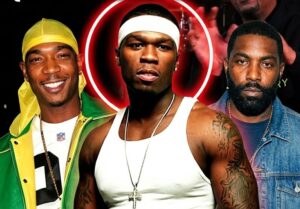
Suge Knight vs Eminem Rap History and the Death Row Aftermath Rivalry
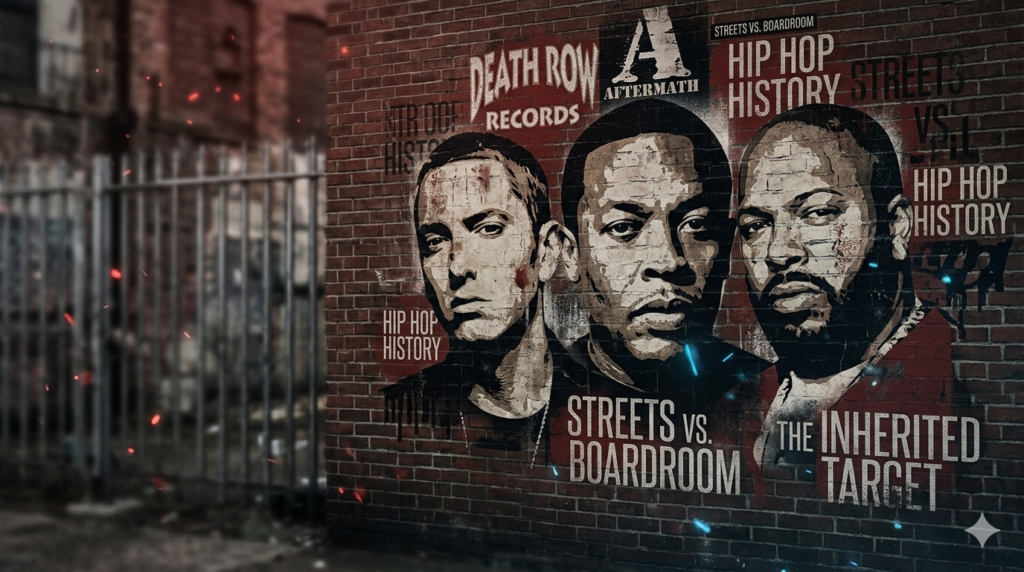
The Inherited Target: How Eminem Landed in the Crosshairs of Suge Knight
In the late 1990s, the hip hop world was going through a huge shift. The West Coast giant Death Row Records, once the most feared and powerful label in the game, was starting to fall apart. Right in the middle of this moment were two men: Dr. Dre, the music genius who wanted out of the chaos, and Suge Knight, the powerful boss who wanted to keep control of the rap game. When Dr. Dre finally walked away and started Aftermath Entertainment, then signed a white rapper from Detroit named Eminem, a brand new chapter of one of hip hop’s most intense rivalries began.
Eminem did not step into a war on purpose. He inherited one. By standing next to Dr. Dre, the young Detroit rapper instantly became a target of Suge Knight’s anger. That conflict almost turned deadly more than once.
The Breaking Point: Why Dr. Dre Left Death Row
To understand why Suge Knight went after Eminem, you first have to understand his history with Dr. Dre. Suge Knight and Dr. Dre helped start Death Row Records in 1991. Together they built a huge empire with massive albums like The Chronic and Doggystyle. But by 1996 things inside the label had become dangerous and messy.
Suge Knight ran the company like the streets. Dr. Dre wanted a cleaner and more professional music business. Dre got tired of constant legal problems, gang connections, and fights happening around the office. As Dre later explained, he wanted to be around positive people who had his best interests in mind. When Dre finally left in 1996 to build Aftermath Entertainment, he did not sit down with Suge to talk it out. Instead he handled the move through Jimmy Iovine and Interscope Records. To Suge Knight this was not just business. To him it felt like betrayal.
The Signing of the White Rapper From Detroit
While Suge Knight was sitting in prison for a parole violation, Dr. Dre heard a demo tape from an unknown rapper named Eminem. Even though many people in the industry doubted that a white rapper could succeed in hip hop, Dre instantly saw rare talent. In 1998 he signed Eminem to Aftermath Entertainment.
From Suge Knight’s point of view this move made the situation worse. His former partner had left him and was now building a brand new empire. On top of that, the artist Dre discovered was becoming one of the fastest rising stars in music. Suge reportedly believed Eminem should have been part of Death Row and felt Dre was using the talent that he helped create. That belief fueled years of threats and intimidation aimed at shaking Eminem’s confidence.
The Source Awards Incident in 2001
One of the most intense moments happened during the 2001 Source Awards. At that time rap award shows were known for tension and sometimes violence. That night the atmosphere became extremely dangerous.
According to Eminem’s former bodyguard Byron Big Naz Williams, the crowd inside the building looked like a sea of red shirts. Because bodyguards were not allowed to sit directly with the artists, Eminem ended up sitting alone in the audience.
Soon a group connected to Death Row Records surrounded him. The men wore red clothing showing their affiliation. They reportedly shouted threats and claimed that Suge Knight had sent them to pressure Eminem. The situation quickly became so serious that security rushed Eminem out of his seat and moved him to safety. Even though he still performed that night, the message was loud and clear. Suge Knight’s influence reached far beyond prison walls.
The In Da Club Video Shoot Stand Off
The tension between the camps continued into the early 2000s. During the filming of 50 Cent’s famous "In Da Club" music video in 2002, Suge Knight suddenly appeared at the set with several associates.
Many people saw this as a power move meant to intimidate Dr. Dre’s new artists including Eminem and 50 Cent. Members of D12 later described the atmosphere as extremely tense. At one point helicopters reportedly arrived to help break up the growing crowd around the video set.
Suge Knight later tried to play the moment down, saying he only wanted to see the new artist everyone was talking about. But people who were there said it felt like a clear reminder that Suge still wanted the rap world to see him as the boogeyman of the industry.
Survival and Legacy
During the early 2000s Eminem lived with serious security concerns. At many public events he wore bulletproof vests and traveled with a large security team.
He even talked about the situation in his music. In the song Like Toy Soldiers, Eminem admitted how hard it was to stay quiet while hearing Suge Knight speak negatively about Dr. Dre, the man who gave him his career and helped change his life.
Even with the threats and intimidation, Eminem never backed down. Supported by the Detroit crew D12 and the production genius of Dr. Dre, he survived the dangerous era that followed the fall of Death Row Records. Suge Knight’s attempts to control or crush Eminem never worked. Instead Eminem became the best selling artist of the entire decade.
Conclusion
The conflict between Suge Knight and Eminem was never really about rap lyrics. It was about the collapse of an old empire and the rise of a new one. Eminem ended up caught in the middle of a battle connected to the power struggle around West Coast hip hop.
Today Suge Knight remains behind bars, while Eminem’s legacy continues to grow. The story still stands as a reminder of how dangerous the mix of street politics and music industry power could become during one of hip hop’s most volatile eras.