The $100,000 G Unit Spinner Chain Story
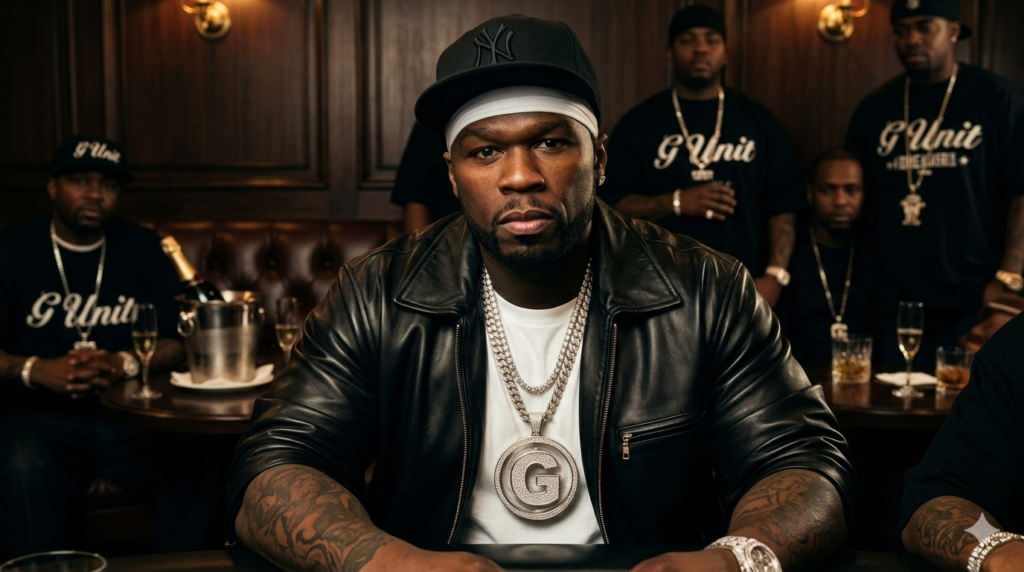
If you were outside in the mid-2000s, you already know how loud the energy was. G-Unit wasn’t just popular, they were everywhere. Cars bumping their music, mixtapes flying around, hoodies with the logo, and 50 Cent moving like the whole rap game had to answer to him. It wasn’t just rap anymore. It felt like a whole movement walking through New York and spilling into every city that had a radio station.
50 Cent, Tony Yayo, Lloyd Banks, Young Buck. That lineup was serious. They weren’t just artists doing shows. They moved like a unit for real, like a tight crew that had each other’s back no matter what. When G-Unit showed up somewhere, people paid attention. Sometimes out of love, sometimes out of pure caution.
And in that era, nothing said power like jewelry.
Not just any jewelry either. We’re talking about the G-Unit spinner chain. If you were around back then, you remember it clear. A massive diamond piece with a G that actually spun. It wasn’t subtle. It was loud, expensive, and basically screamed “we made it and we know you see us.”
That chain was worth around $100,000 at the time, maybe more depending on who you ask. But in hip hop, the price tag wasn’t even the main thing. It was what it represented. That chain was like a trophy you wore in public. And if anything happened to it, it wasn’t just a loss of jewelry. It was a hit to your name.
Because in that world, losing your chain meant something deeper. It meant you slipped. And slipping in that era could follow you forever.
That’s where this story starts to get real.
It was 2004, and G-Unit was at the top of the game. No debates. Radio runs, club appearances, magazine covers, sold-out shows. They were moving like they couldn’t be touched. That confidence followed them everywhere they went, including Chicago.
Young Buck was out there for a club appearance. The energy was high, the crowd was packed, and everything looked like a regular night in the club life. People pushing, music loud, drinks everywhere, security trying to hold it down. The usual chaos.
But in the middle of all that movement, things went left real quick.
Somewhere in that crowd, during all the bumping and rushing, a local group saw an opening. Buck’s chain got grabbed off him in the confusion. Just like that, it was gone. The G-Unit spinner, the piece that meant everything to the brand, disappeared into the night.
No warning. No clean fight. Just a quick moment and then silence.
And you already know how fast news travels in hip hop. Back then it wasn’t Instagram or Twitter, but it might as well have been. Word of mouth, phones, club DJs, people in parking lots. Within a short time, everybody in Chicago knew what happened. G-Unit just got hit.
Now the people who took it didn’t hide it like they were scared. Nah. They started showing it off. There were old camcorder videos floating around of them wearing the chain, laughing, acting like they had just pulled off the biggest move of the year. To them, it was a trophy.
But in rap, trophies can turn into problems real quick.
For 50 Cent, it wasn’t even about the money. Let’s be honest, $100,000 wasn’t breaking his world. The real issue was respect. G-Unit was built on an image of being untouchable. 50 came into the game after surviving getting shot nine times. His whole brand was built on pressure, survival, and fearlessness.
So if someone could take something from his crew in public like that, it wasn’t just a robbery. It was a challenge to the entire image he built.
But instead of reacting the way people expected, 50 didn’t go the loud route. No random retaliation, no public meltdown. He moved differently. Quiet but calculated.
He made a phone call.
And that’s where the story takes a turn most people don’t see coming.
The call went to the Flores Twins, Pedro and Margarito Flores. Now if you don’t know who they are, understand this. These weren’t regular street guys. These two ended up becoming some of the biggest drug traffickers connected to the Sinaloa Cartel, working under Joaquin “El Chapo” Guzman at the height of their operations.
But before all the headlines and prison time, they were deeply plugged into Chicago’s underworld. And strangely enough, they were hip hop fans too. They respected 50 Cent and his movement. That connection mattered.
So when 50 told them what happened, they didn’t take it lightly. Not even close.
The reaction wasn’t loud or emotional. It was controlled, almost surgical. The kind of response that doesn’t need threats or speeches.
Word started moving through Chicago in a different way. The message wasn’t “we’re coming for you.” It was colder than that.
Business was going to stop until the chain came back.
And in that world, stopping business means everything freezes. Money slows down. Pressure builds. People who usually don’t panic start getting uncomfortable. Because when the flow of money gets interrupted, everybody feels it.
Now those guys who took the chain realized real quick they didn’t just rob some rappers. They had stepped into something way bigger than them. What felt like a quick flex suddenly turned into a situation they couldn’t control.
And just like that, the energy shifted.
Tony Yayo later said the chain came back “real quick.” No long standoff, no dramatic showdown. It was returned through the proper hands and made its way back to G-Unit without a fight. Quietly. Clean. Done.
Just like that, the situation reset.
What makes this story stick isn’t just the chain or the robbery. It’s what it says about power in that era. G-Unit wasn’t just a rap group with influence in music. They had connections that reached way outside the industry. Not in a fantasy way, but in a real-world, pressure-moves-behind-the-scenes kind of way.
That spinner chain ended up becoming more than jewelry. It turned into a symbol of how far 50 Cent’s reach really went during his prime. You weren’t just dealing with artists. You were dealing with a network that could move across cities, industries, and levels of power most people never even think about.
Years later, the Flores Twins would reconnect with 50 in interviews and podcasts, talking about their past lives and how random the intersection with hip hop really was. Life moves funny like that.
But if you take anything from this story, it’s simple. In the mid-2000s G-Unit wasn’t just a rap crew you could test for clout. They were connected in ways that made even small situations turn serious fast. And that G-Unit spinner chain? It wasn’t just bling. It was a reminder that in that era, respect wasn’t optional.