The Eminem Debate Split Hip Hop in Half and It Still Not Over
Hip hop has always loved a good argument. Who got the best album? Who had the hardest bars? Who really changed the game? People will fight over that stuff for hours like it’s life or death. But there’s one debate that never cools off. Doesn’t matter how many years pass. Doesn’t matter how many records get sold.
Say Eminem’s name in a room full of hip hop fans and watch what happens.
Some people will tell you he’s one of the greatest rappers who ever touched a mic. Others will look at you crazy for even saying it. And truthfully? This whole thing stopped being just about music a long time ago.
It turned into something bigger.
When Eminem came out in the late 90s, hip hop was already massive, but it still felt like a world with rules. A lot of people saw rap as something built from Black struggle, Black pain, Black neighborhoods, and Black creativity. Then here comes this white dude from Detroit with bleached hair, crazy rhyme schemes, and enough anger in his voice to shake the walls.
At first, folks thought he was just another gimmick.
A lot of white rappers before him got laughed out the room. Vanilla Ice pretty much became a joke in hip hop history. So when Eminem popped up, people were waiting for the same thing to happen. They thought he’d have one hit and disappear.
That ain’t what happened.
Instead, the man started destroying everybody lyrically. Battle rappers respected him. Producers respected him. Fans went crazy for him. Then Dr. Dre stamped him, and once Dre gave him that co-sign, the game changed overnight.
Still, even with all the success, some people never fully accepted him.
And that’s where this debate gets real uncomfortable for folks.
A lot of people feel hip hop is more than beats and rhymes. To them, it’s culture. History. Survival. So when people start calling Eminem the greatest rapper ever, some hear that as disrespect toward the Black artists who built the foundation in the first place.
That’s why comments from people like Dr. Umar Johnson hit so hard online.
When he went on Joe Budden’s podcast and said no non-African person could be the greatest at something created by African people, social media exploded. You had people cheering him on, saying he spoke facts nobody wanted to admit out loud.
Then you had others saying talent is talent, period.
The clip spread everywhere because Dr. Umar didn’t sound unsure. He sounded completely locked in. To him, the argument wasn’t even about Eminem’s skill level. He was talking about ownership. Identity. Respect for where the culture came from.
And honestly, whether people agreed or not, you could tell the conversation touched a nerve.
Then Boosie Badazz jumped in from another angle.
Boosie basically said nobody in his hood rides around blasting Eminem records. He respected Em’s technical skill, sure, but he made it clear that where he’s from, that music doesn’t move the streets the same way.
Now, some Eminem fans got offended by that, but Boosie wasn’t really saying Eminem couldn’t rap. He was talking about connection. Energy. What people actually play outside on a hot summer day sitting on the block.
And let’s be honest for a second. Hip hop has always had layers. Some rappers dominate the charts. Some dominate the clubs. Some dominate backpack rap circles. Some dominate suburban playlists. Not everybody hits every lane equally.
But then the other side came swinging right back.
The Game defended Eminem heavy. And when Game talks West Coast rap, people listen. This is somebody who came up around Dre and 50 Cent, so he saw Eminem up close during that monster era. Game flat out said Em belongs in the greatest ever conversation.
Busta Rhymes took it even further.
Busta basically acted like the whole debate was silly. To him, Eminem’s pen game speaks for itself. And when Busta talks about rap skill, that carries serious weight because Busta’s been respected for decades by almost everybody in the culture.
That’s the thing about Eminem. So many legendary rappers back him publicly.
Nas praised him. Jay-Z worked with him. Rakim respected him. Kendrick Lamar showed love too. It’s hard to ignore all those co-signs from artists who helped shape hip hop themselves.
Then things got even deeper when Professor Cornel West spoke on Eminem.
Now you got an intellectual voice stepping into a rap debate.
Cornel West called Eminem a genius. Straight up. No hesitation. And that changed the tone because it pushed the conversation outside just music fans and bloggers. Suddenly people started talking about class, poverty, struggle, and what it means to grow up on the edge of survival.
Because no matter what anybody thinks about race in hip hop, Eminem’s story was rough.
Trailer parks. Addiction. Violence. Poverty. Broken family life. Dude came from chaos.
And that’s why the Mike Tyson moment hit so different.
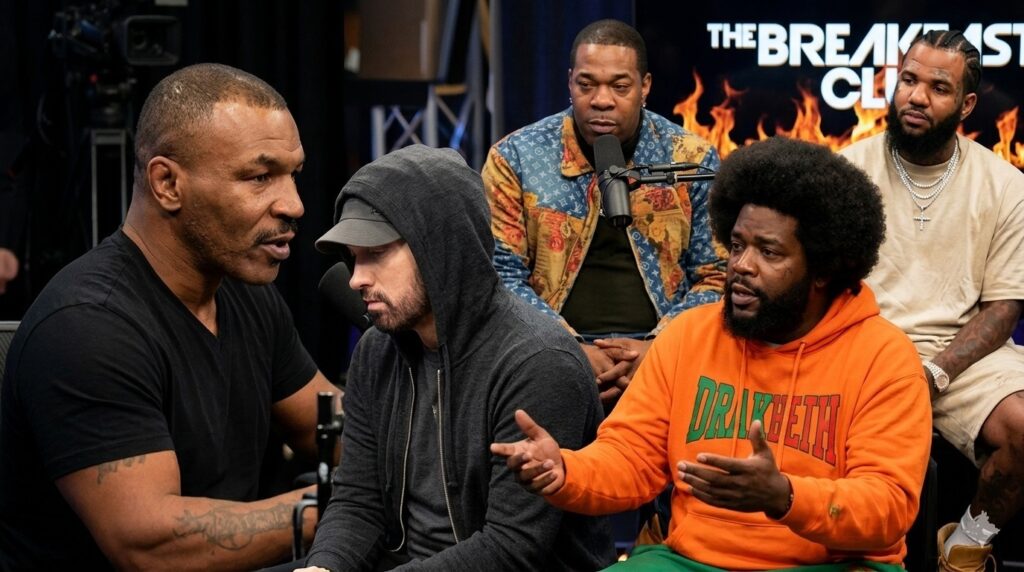
When Tyson sat across from Eminem and told him he understood struggle like a Black man, the room got heavy. Tyson wasn’t talking about skin color. He was talking about pain. Trauma. Fighting through life when the odds already picked against you.
You could see Eminem almost freeze for a second. He laughed a little, got quiet, and looked uncomfortable in that humble kind of way.
That clip spread because people felt something real there.
Tyson knows what it means to survive dark places. So hearing him connect with Eminem like that made a lot of people stop and think.
But here’s the truth nobody likes admitting. This debate probably never ends.
For some fans, Eminem’s technical skill alone puts him near the top forever. The rhyme patterns. The storytelling. The breath control. The way he bends words. That stuff is undeniable.
For others, greatness in hip hop can’t be separated from culture and lived experience. To them, being the best means more than just selling records or rhyming fast.
And honestly? Both sides feel passionate for real reasons.
That’s why the Eminem conversation still lives after all these years. It’s not just about one rapper anymore. It’s about who gets accepted, who gets celebrated, and who gets remembered when hip hop tells its story years from now.
Meanwhile, Eminem keeps doing what he always did. Dropping music. Breaking records. Staying quiet most of the time while everybody else argues around him.
And maybe that’s the wildest part of all.
The culture still can’t fully agree on him, but somehow he became impossible to ignore anyway.