The Real Story of Eminem’s “Brain Damage”: How a Childhood Beatdown Built a Legend
In hip hop, everybody loves to say they “real.” You hear it in every other bar, every interview, every freestyle clip online. But most of the time, it’s just talk. A vibe. A character people switch on when the camera’s rolling.
Then there’s Eminem.
This dude didn’t just rap about pain. He lived it before anybody even knew his name. Before the Grammys, before the Super Bowl halftime stage, before he became one of the most studied lyricists in music history, he was just Marshall Mathers a skinny kid moving through schools where survival mattered more than popularity.
And one story from his childhood still stands out like a scar you can’t cover up.
Back in the early 1980s, long before the world knew him as Slim Shady, Marshall was bouncing between Missouri and Michigan. New school after new school. New faces. New pressure every time. If you’ve ever been the “new kid” in a tough environment, you already know how quick people can clock you as an easy target.
And that’s exactly what happened.
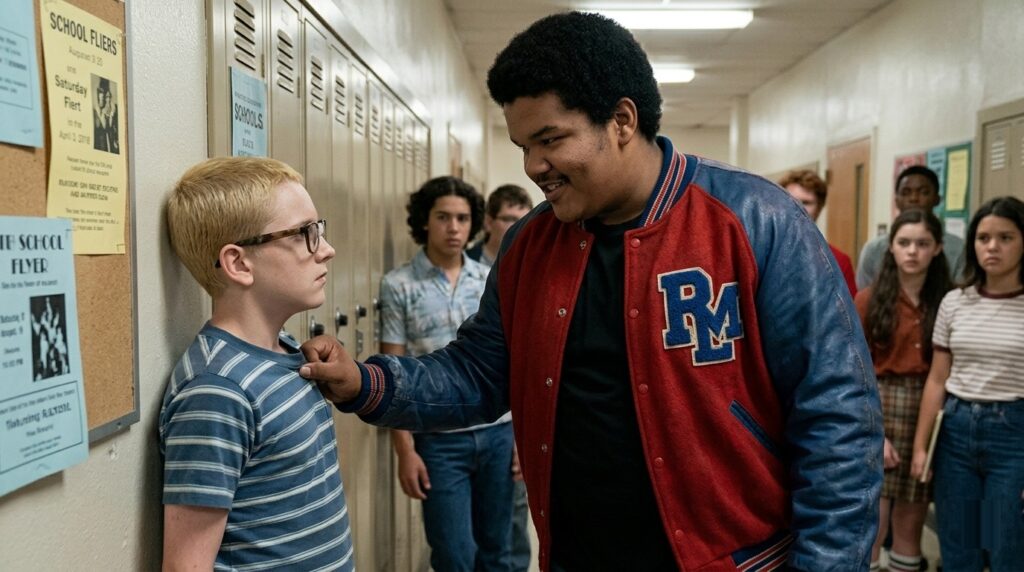
At Dort Elementary in Roseville, Michigan, one kid kept locking onto him. Older. Bigger. Meaner. A kid named DeAngelo Bailey.
This wasn’t regular playground teasing. It wasn’t harmless jokes or little shoves in the hallway. According to stories that later came out through court filings and interviews, Bailey had a reputation for picking on Marshall over and over again. Not once in a while. Repeatedly. Like it was routine.
And it kept building.
The worst moment came in January 1982. Marshall was around nine years old. That day, things went too far. The story that later ended up being referenced in Eminem’s music says Bailey cornered him inside a school bathroom. What happened next changed everything.
Marshall got seriously hurt. Bad enough that he ended up in a coma and had to be rushed into the hospital. Imagine being a kid that age, waking up in a hospital bed with your family around you, not fully understanding how something like that even happened in a place that’s supposed to be safe.
His mother, Debbie Nelson, didn’t just sit with it. She took action and even sued the school district, saying they failed to control the bullying situation. The case didn’t go far in court, but the damage to Marshall’s life was already real. That kind of trauma doesn’t just disappear when the paperwork is done.
It stays.
Fast forward years later, and that same kid is now Eminem, signed to Dr. Dre’s Aftermath label, shaking up the whole music industry with The Slim Shady LP. Dark humor, wild storytelling, sharp lyrics he came into the game like a storm.
And then came one track that hit different: “Brain Damage.”
For most listeners, it was just another creative, exaggerated Slim Shady story. But for people who knew his past, it wasn’t fiction. It was memory turned into music.
On that song, Eminem didn’t hide anything. He called out DeAngelo Bailey directly. No coded lines. No fake names. Just straight storytelling. He described the bullying, the bathroom incident, and the feeling of being completely powerless as a kid.
It wasn’t just rap. It felt like someone finally opening a locked door in their mind.
And here’s where things got even more wild.
Instead of staying quiet, Bailey responded years later with a lawsuit. He sued Eminem for defamation, claiming the song ruined his reputation and even hurt his chances of making it as a rapper. He wanted money, claiming the story made him look worse than reality.
But the problem was simple.
He had already talked about it himself.
In a prior interview with Rolling Stone, Bailey admitted that there was bullying and that things did get physical. He even described moments of rough treatment during school years. That one interview basically undercut his entire lawsuit because it confirmed the core truth behind Eminem’s lyrics.
Now, nobody’s saying every detail in a rap song is courtroom-perfect accurate. Hip hop exaggerates, stretches moments, paints emotions bigger than life. That’s part of the art. But when the base of the story is already confirmed by the person involved, the case gets shaky fast.
And that’s exactly what happened.
The lawsuit moved through the system until it landed in a Michigan courtroom in 2003. That’s where things took a turn nobody expected.
Judge Deborah Servitto didn’t just issue a dry legal ruling. She actually responded in rhyme. Yeah, you read that right.
She wrote her decision like a rap verse, basically breaking down why Bailey didn’t have a strong case. She pointed out that Eminem’s lyrics were protected artistic expression and that the average listener wouldn’t take every word as literal fact.
In her ruling, she even used rhyming lines to explain the logic, something like pointing out that the claims didn’t hold weight and the lawsuit wasn’t strong enough to move forward.
It was one of those rare moments where hip hop and the courtroom collided in a way nobody saw coming.
Case dismissed.
What makes this whole situation hit harder is what it says about Eminem’s career overall. He’s not just someone telling stories for entertainment. A lot of his music comes from real places anger, trauma, survival, and memory. He takes things that could’ve broken him and turns them into verses that reach millions of people.
That’s why “Brain Damage” stands out. It’s not just shock value. It’s transformation. Turning something painful into something powerful.
And DeAngelo Bailey? Over time, he became more of a footnote in the story. Not some legendary rival or industry figure. Just a reminder of where the story started.
Meanwhile, Eminem took that early pain and built an entire legacy on top of it. Diamond records. Global tours. Cultural impact that still gets studied today.
The deeper message in all of this isn’t really about a lawsuit or a courtroom win. It’s about what people do with their story.
Eminem could’ve stayed silent. He could’ve buried that memory. Instead, he turned it into art. And that art ended up shaping how the world sees him not just as a rapper, but as someone who survived his own past and made it part of his voice.
In hip hop, everybody talks about being real.
But every once in a while, somebody actually shows it.