Eminem vs Benzino: The Rap Beef That Hurt The Source Magazine and Ended a Career
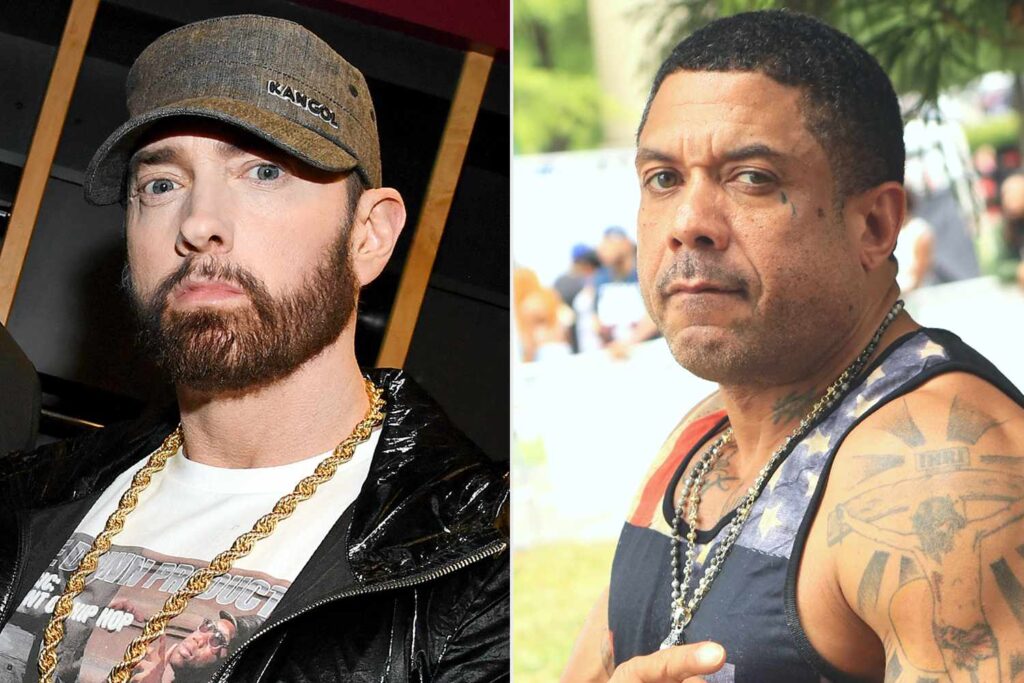
If you been around hip hop long enough, you already know beef is part of the game. It comes with the territory. Sometimes it’s quick, just a few bars back and forth. Other times it turns into something way deeper, something that shakes the whole culture. And then there are those rare ones that don’t just end careers, they end institutions.
That’s exactly what went down with Eminem and Ray Benzino.
This wasn’t just two rappers trading insults. This was a full-on cultural collision. A slow burn situation that ended with one of the most powerful hip hop magazines ever losing its grip, and a rapper getting stuck in a moment he never really bounced back from.
Back then, The Source magazine wasn’t just a magazine. It was the magazine. People used to call it the Bible of Hip Hop, and that wasn’t an exaggeration. If you got a Five Mic rating, you weren’t just hot, you were certified legend status. That rating could change your whole life overnight. Labels cared. DJs cared. Fans treated it like gospel.
And right in the middle of that power was Ray Benzino.
Now Benzino wasn’t just an executive. He was also a rapper trying to make his own mark. And that’s where things started to get messy. Because when you’re sitting on a throne like The Source, and you also want respect as an artist, things can get real personal, real fast.
Around the early 2000s, Eminem was already on another level. Dr. Dre had co-signed him, Aftermath was behind him, and every record he dropped was going global. Whether people liked him or not, you couldn’t ignore him. The Source had even highlighted him early in the “Unsigned Hype” days, so they knew what he was capable of.
But as Eminem’s fame exploded, Benzino started moving different. What began as criticism slowly turned into something more personal. He started questioning whether Eminem was “real hip hop” or just a product of the industry machine. And yeah, discussions about race in rap were nothing new, but the way Benzino went about it made things feel less like debate and more like a mission.
The magazine started taking shots at Eminem in issue after issue. It wasn’t subtle. Readers could feel it. The tone shifted. What used to feel like a neutral authority started feeling like a personal platform for one man’s opinion.
And hip hop being hip hop, that tension didn’t stay on paper.
Benzino’s group Made Men and Eminem’s crew D12 weren’t exactly on friendly terms either. Award shows, backstage meetings, industry events, all of it had this weird energy like something could pop off at any moment. It wasn’t just music anymore. It was pride, ego, and reputation all tangled together.
Then came the moment that took everything past the point of return.
Benzino made a comment about Eminem’s mother, Debbie Mathers, saying he would slap her. Now, anyone who knows Eminem’s music knows his relationship with his mom was already complicated. He rapped about it openly, sometimes painfully, sometimes angrily. But that was his story to tell. Nobody else stepping into that space was ever going to end well.
And it didn’t.
That comment flipped a switch. Eminem didn’t go on camera. He didn’t do interviews. He didn’t chase clout on talk shows. He went straight to what he knows best, the studio.
And what came out of that period was not just one diss track. It was a full campaign.
“The Sauce,” “Nail in the Coffin,” “Bully,” and “The Conspiracy Freestyle” all came out swinging. Then you had “Go to Sleep” with DMX and Obie Trice, which felt less like a song and more like a group execution. Every track had a different angle, but the message was consistent. Eminem wasn’t just responding. He was dismantling everything around Benzino’s name.
What made it worse for Benzino was how precise Eminem was. He didn’t just insult him. He broke down his credibility piece by piece. He questioned his street image. He brought up financial struggles. He made it feel like Benzino was trying to stand on a foundation that wasn’t even solid in the first place.
And while all this was happening in the music, something else started cracking in the background.
The Source magazine began to lose its grip. Fans noticed the bias. Artists started distancing themselves. Advertisers didn’t want the drama. What used to be the most trusted voice in hip hop slowly turned into a battleground for personal grudges.
Eventually, even the people who built it couldn’t hold it together. The original founders ended up being pushed out. Years later, one of them admitted what a lot of people already suspected, that letting personal issues bleed into the magazine was a fatal mistake.
By the time everything settled, the damage was done.
Eminem kept climbing. Albums sold in the millions. Awards kept stacking. His legacy only got stronger with time. Love him or hate him, his place in hip hop history is locked in.
Benzino, on the other hand, never really recovered from that era. Every so often, interviews surface where he’s still talking about Eminem, still frustrated, still emotional about how things played out. And it doesn’t feel like a rivalry anymore. It feels like someone stuck replaying a moment that the world moved on from years ago.
And that’s the part of this story that hits hardest.
Because at its core, this wasn’t just about rap lyrics. It was about power, ego, and the danger of mixing personal feelings with cultural influence. Benzino thought he could challenge a superstar from a position of media authority. He thought the platform would protect him.
But hip hop doesn’t really work like that. Not when the pen starts moving.
Eminem didn’t need anything physical to end the conversation. No fights, no chaos in the streets. Just words, delivered with precision and anger and timing.
And when the dust settled, one man was still shaping the culture, still breaking records, still talked about everywhere. The other became a cautionary tale about what happens when the line between criticism and obsession disappears.
That’s the legacy of that beef. Not just who won or lost, but how one spark helped burn down an empire from the inside.