The Fatal Blow by Eminem: When Ja Rule’s Lyrics Cost Him a Career
Rap beef has always been part of hip hop. That’s not even up for debate. Ever since block parties in the Bronx, rappers have been trading bars like it’s a sport. Who’s the best? Who’s really running the city? Who got the biggest buzz? Most of the time it’s just competition, sometimes even fun. Fans eat it up, artists get their moment, and life moves on.
But every now and then, somebody crosses a line that changes everything. Not just for a moment, but for a whole career. Early 2000s hip hop had one of those moments, and it all came down to Ja Rule stepping into a war he probably should’ve walked away from.
Back then, Ja Rule was everywhere. You couldn’t escape him. Radio, clubs, TV, he was locked in. That raspy voice mixed with melodic hooks made him a monster on the charts. Murder Inc. was moving like a machine too. It felt like they had the game in a headlock. For a minute, it looked like nobody could touch them.
But hip hop always shifts fast. And Ja Rule made a decision that changed everything. He went at Eminem.
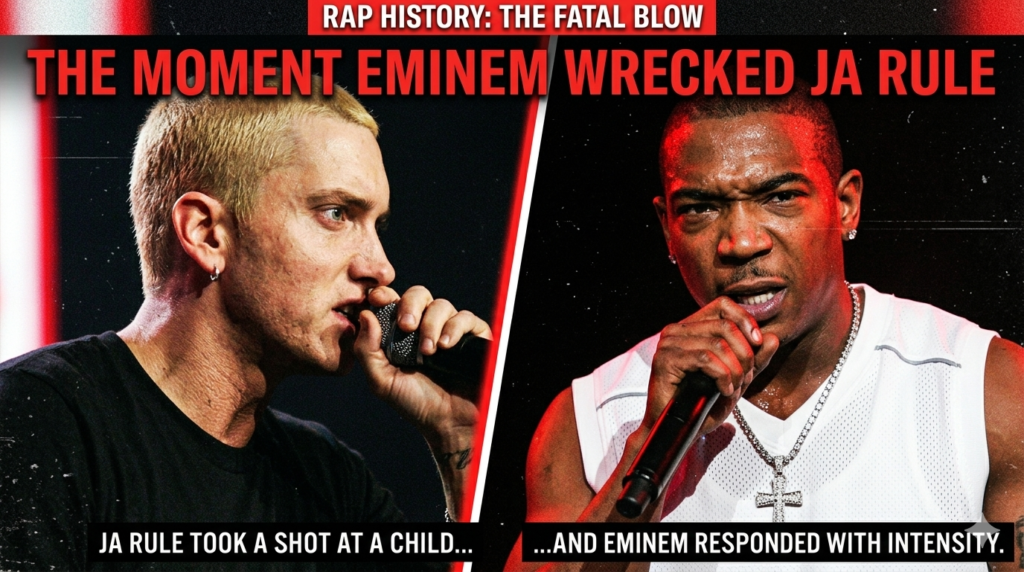
Now, going at Eminem is already risky business. Marshall Mathers doesn’t just rap, he dissects people. He studies angles, finds pressure points, and hits where it hurts. But Ja Rule didn’t just send shots. He went personal. He brought Eminem’s daughter, Hailie Jade, into the conversation. And in this culture, that’s a line most people know better than to cross.
That one move didn’t just start a beef. It shifted the entire energy of hip hop at the time.
To really understand how things got there, you gotta look at what was happening around 2002. Ja Rule wasn’t just dealing with one opponent. He was already locked in with 50 Cent. That beef was messy, street-level, and everywhere at once. Diss tracks, interviews, tension in the air, it was all part of the package.
Then 50 Cent linked with Dr. Dre and Eminem under Shady and Aftermath. That changed the whole board. It wasn’t just 50 anymore. Now it was G-Unit, Shady, Aftermath moving like one unit. That’s when things stopped being a regular rap feud and started feeling like a full-on industry takeover.
At first, Eminem wasn’t even trying to be involved. He was focused on his music and staying out of the chaos. But once his camp backed 50 Cent fully, there was no real way to stay neutral. If your team is in the fight, you’re in it too, whether you want it or not.
Meanwhile, 50 Cent was on fire. “Wanksta” was tearing through the streets. “In Da Club” was everywhere. That energy made Ja Rule’s softer, melodic style feel out of place in a moment where aggression was winning. You could almost feel the shift happening in real time.
Ja Rule knew it too. The pressure was on him. He needed a moment that would swing attention back his way. That’s when he dropped “Loose Change.”
And that record? That’s where everything went left.
Instead of keeping it strictly rap, Ja went personal. He questioned Eminem’s family life, and most importantly, he brought up Hailie. In hip hop, there’s tough talk, there’s disrespect, and then there’s crossing into family territory. Once you do that, the temperature changes completely.
The reaction was immediate. Fans weren’t debating bars anymore. They were talking about respect, limits, and who went too far. Even people who weren’t hardcore Eminem fans looked at it sideways. It didn’t feel like a rap move. It felt desperate.
And Eminem? He didn’t respond instantly. That’s the part a lot of people forget. No tweets, no interviews, no emotional outbursts. Just silence. But in hip hop silence usually means one thing, preparation.
While the internet was arguing, Eminem was working.
When he finally came back, it wasn’t with one song. It was a wave. Tracks like “Doe Rae Me,” “Bully,” and “Hail Mary” started circulating, and the tone was different. This wasn’t playful Slim Shady energy. This was sharper, colder, more focused.
He didn’t just attack Ja Rule’s rapping. He went at the whole image. The voice, the persona, the credibility. Even comparisons came out, like putting Ja in the same sentence as artists who had already taken major Ls in rap history. It wasn’t just disrespect, it was framing the narrative.
On “Doe Rae Me,” there was even a moment involving Hailie, but not in the way people think. It wasn’t exploitation. It was more like a statement. Like, “You don’t bring kids into this world.” Period. That track made the message loud without even needing extra explanation.
At the same time, Murder Inc. wasn’t just dealing with music beef. They were under heavy legal pressure too. Federal investigations were circling. Rumors were everywhere. The energy around the label started shifting from dominance to survival mode.
And hip hop fans? They move quick. One minute Ja Rule was running the summer. Next minute, the same crowds were chanting G-Unit at clubs. Radio stations started pulling back. DJs started switching records. The momentum flipped faster than anybody expected.
That’s the thing about hip hop fame. It can rise slow and fall fast.
Ja Rule went from chart-topping hits to being in the middle of jokes and criticism in what felt like no time. The beef with Eminem didn’t cause every problem, but it definitely poured fuel on an already burning situation. It turned attention away from the music and straight onto the drama.
Years later, people still bring it up because it’s one of those moments that shows how sharp the edges of hip hop can be. You can have success, money, and a strong run, but one wrong line can shift everything.
Eminem came out of it even more solidified. Not just as a rapper, but as someone you don’t casually step to. Ja Rule kept working, still doing shows, still has fans, but that era of dominance never really came back the same way.
That whole situation is a reminder of how this culture works. Words matter. Timing matters. And respect in hip hop isn’t just a slogan, it’s currency. Once it’s gone, it’s hard to get back.
In the end, this wasn’t just a beef between two artists. It was a lesson the whole game watched in real time. Some lines you can’t uncross. And in hip hop, once the crowd turns, there’s no rewind button.