Why Hip Hop Embraced Eminem and Rejected Vanilla Ice
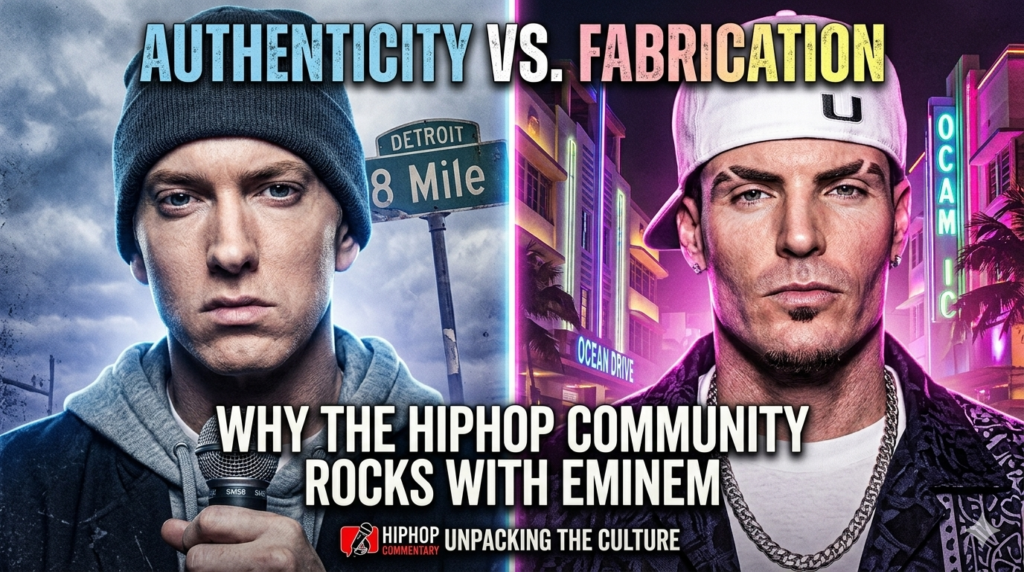
Back in the late '80s and early '90s, hip hop was blowing up past New York City, spreading like wildfire. As the culture grew global, white artists started stepping into the game, trying to stake their claim in a scene built on Black struggle and street credibility. Two names stand out at opposite ends of this story: Vanilla Ice and Eminem.
Both made it big, but their legacies couldn’t be more different. One is remembered as a cautionary tale of fake swagger, the other as a lyrical titan. The secret sauce that separates the two? A code the hip-hop world never bends on: Keeping it real.
The Rise and Fall of the "Ice Age"
Vanilla Ice, born Robert Van Winkle, blew up worldwide with his 1990 hit "Ice Ice Baby." He became the first rapper to top the Billboard charts, bringing hip hop to the suburbs in ways no one had seen. On paper, he had it all—the style, the dance moves, the catchy hook.
But the shine was fake. The culture caught on fast: Vanilla Ice was seen as "pretending to be something he wasn’t." His team spun a story that he came from Miami’s rough streets, but journalists exposed the truth. When the hip-hop community realized his "street cred" was a lie, the backlash was brutal.
The infamous Suge Knight balcony moment only fueled the fire. Vanilla Ice stood there under literal and metaphorical pressure, trying to defend himself. He even brought Flavor Flav on stage to show he had "Black supporters." But respect in hip hop isn’t borrowed or bought—it’s earned through struggle, skill, and street experience. Vanilla Ice learned that the hard way.
Eminem: Detroit’s Raw Outlier
Fast forward to the late '90s, and a new white rapper burst from the underground: Marshall Mathers, a.k.a. Eminem. Unlike Vanilla Ice, Eminem didn’t try to fake a backstory—he owned his reality. A "trailer park kid" from 8 Mile, Detroit, he was upfront about poverty, family drama, and his own scars.
Eminem earned love from the culture because he had two things Vanilla Ice never did: skill and honesty. He didn’t try to play a street persona; he made his own. As The Game said in the video, "He’s from Detroit... he's from 8 Mile." That authenticity gave him a pass no marketing campaign could buy.
Lyrics Over Look: The Skill Gap
Here’s where the gap gets real. Vanilla Ice was a performer. Eminem? He was a lyricist. He battled through Scribble Jam and Rap Olympics, proving himself in some of the most hostile, high-stakes environments. Race didn’t matter—skill did.
When you can spit bars that cut deep, the culture forgives your background. Eminem’s humor, self-deprecation, and brutal honesty about being white and different preemptively handled the criticism that Vanilla Ice couldn’t survive. He wasn’t trying to fake the game—he demanded his spot by merit alone.
The Legacy of "Keeping it Real"
The story of these two artists is a blueprint for anyone stepping into hip hop—or any tight-knit creative community.
-
Vanilla Ice showed that the white-washed, commercial approach might make money, but it won’t earn respect.
-
Eminem showed that staying true to your reality, embracing your scars, and delivering raw skill builds a legacy.
As the video wraps up, the culture "rocks" with Eminem because he never hid his pain. He laid it out for the world, and that honesty made him one of the most respected figures in music history.